
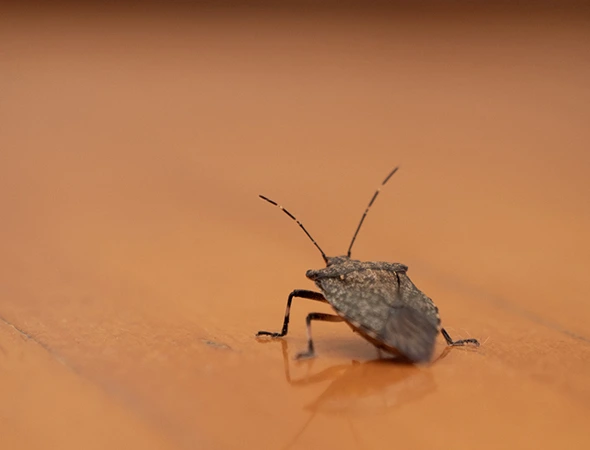
Ants marching across the counter, roaches scattering when the lights come on, and a paper nest under the eaves need different fixes. Our insect control in Worcester, MA gives homes and businesses a treatment matched to the species. We find where the insects live and breed. Acting before a colony grows keeps the job smaller.
Get in touch
Insect control is the process of identifying which insects are active in a building, finding where they nest or breed, and treating them in a way that fits their biology. A spray that works on one species can make another worse, so we identify first. Our work usually involves locating harborage, the hidden spots where insects shelter, then using targeted baits, crack-and-crevice treatments, nest removal, or sealing entry points. We also point out moisture, clutter, or food sources that keep bringing them back. Spider control fits here too, since spiders follow the insects they eat, and fewer insects usually means fewer webs.
Two cockroaches cause most indoor calls, and they need very different handling. German cockroaches are small, light brown, and live indoors year-round, crowding into warm, tight spaces near food and water, like gaps behind a stove or under a dishwasher. American cockroaches are much larger, reddish, and usually wander up from basements, floor drains, or damp crawlspaces. Knowing which one you have tells us where the population really lives.
Our cockroach control in Worcester starts with that identification, then moves to the harborage points roaches return to during the day. In apartments and shared buildings, we pay close attention to plumbing chases and wall gaps that let roaches move between units. Restaurants and food businesses get the same careful look around prep areas and storage. We place treatments where roaches feed and hide, not across open floors where they rarely stop.
Our Services
Insects are often only part of the story. A roach problem can sit alongside mice in the same wall, and carpenter ants can hide a moisture issue that attracts termites. Here is how we handle the rest of your property.
Moving into a new place often reveals pests the last owner never mentioned. General pest control handles everyday invaders that do not fit one neat category, and we start by confirming exactly what you have. Our treatment then goes after the source. You settle in without sharing the space.
Nap times, curious pets, and kids playing on the floor all shape how a home should be treated. Residential service builds the plan around how your household uses each room. We tell you what we apply and where, and our instructions help you get back to your normal routine.
Property managers and business owners answer to customers, tenants, and inspectors. Commercial service addresses pests in food service, retail, offices, and rental buildings. We schedule our visits to limit disruption and focus on trouble spots like storage rooms and loading doors. Your space stays presentable for customers and tenants.
A rat burrow by the foundation or mice in the garage needs more than bait. Rodent control removes the animals and seals the openings they squeeze through. Our exclusion work targets the gaps they use, and we point out nearby food and nesting spots. Fewer openings mean fewer new arrivals.
Anyone facing a crawling or flying pest they cannot shake fits here. Insect control matches the treatment to the species, since ants, roaches, and wasps behave very differently. We explain what we found before treating anything. Our goal is a fix aimed squarely at the insect causing the trouble.
Mud tubes climbing a foundation wall point to a problem below ground. Termite solutions target subterranean termites where they enter the structure and help protect it afterward. We confirm the culprit is not carpenter ants, since the fixes differ. Our work helps preserve the framing and sills holding everything up.
Home buyers working toward a closing date need a clear picture of pest activity. A pest inspection documents what is present, any past damage, and conditions that invite trouble. We explain our findings in plain terms. Our report gives you solid ground for negotiating or planning repairs.
Pests follow the calendar, with ants active in spring, wasps in summer, and mice looking for warmth in fall. Preventive service times our visits to those shifts, so treatment happens before activity peaks. We also flag conditions that attract pests. You spend less time reacting to surprises.
Work Process
Here is what to expect once you reach out.
Describe the Problem
Call, text, or email us with what you are seeing and where. A photo helps, and so does noting the time of day the insects show up.
Find the Source
We follow trails, check hiding spots, and look for nests tied to the activity you reported. Then we explain what the insect is and what our treatment involves.
Target and Treat
With your go-ahead, we treat the nest, harborage, or entry points for that specific insect. You also get clear guidance on what to expect in the days after.
A thin line of small ants heading toward the sink is usually one of two common species. Pavement ants nest under slabs, walkways, and foundations, while odorous house ants give off a smell like rotten coconut when you crush one. That little test helps us narrow down what is getting into your Waltham kitchen and how.
Wiping up the trail or spraying it only removes the workers you can see. The queen and the nest she supplies stay untouched, so a new line shows up a few days later. We trace the trail back to the entry point, such as a window gap, slab crack, or utility line, and treat so the nest itself gets hit. Our goal is fewer ants next week, not just today.
Wasp nests start small in spring with a single queen and grow through the summer. By late summer, colonies reach their peak, and yellowjackets forage hard around trash cans and cookouts. A nest beside a Somerville back door or porch step is far easier to deal with in June than in August.
We identify the insect first, because each one nests differently. Yellowjackets often nest in the ground or inside wall voids, bald-faced hornets hang gray, football-shaped nests from trees and eaves, and paper wasps build open combs under railings. Please do not plug a wall-void entrance, since the insects may chew their way inside instead. Our treatment depends on the nest’s location. If it turns out to be honeybees, we will tell you so a local beekeeper can relocate them.
Carpenter ants do not eat wood. They excavate it to build nests, and they prefer wood that is already soft from moisture, such as window sills, roof edges near a leak, porch framing, or sill plates by a damp foundation. The clearest sign is frass, a fine, sawdust-like debris mixed with insect parts, pushed out of small openings below the nest. Large black ants indoors in late winter or early spring may point to a nest inside the structure.
Medford properties often have a parent colony outdoors in a stump or tree and satellite nests inside the walls. We track foraging paths, often at night when activity peaks, to find both. Our treatment targets the nests, and we point out the moisture problem that attracted them. If the damage looks like termites, our termite control page explains the difference.
Tiny moths fluttering around a Boston kitchen at night, or small beetles in a bag of flour, usually trace back to a single infested package. Indian meal moths, flour beetles, and weevils arrive inside dry goods from the store, then spread to nearby grains, cereals, nuts, spices, pet food, and birdseed. Faint webbing or clumped flour is often the giveaway.
This is the one insect problem where cleaning matters more than chemicals. We help you check every dry food container, find the source, and decide what to throw out. Then we treat shelf cracks and corners where larvae crawl to pupate, since spraying cabinets without removing the source only buys time. Our advice on airtight storage helps keep the next bag from starting it again.
Get In Touch With Us Now!
Text a clear photo of the insect to (781) 484-6230, and we will help you figure out what it is and where it lives. You can also call or email rogersxtermination@yahoo.com to set up a visit.
Call: (781) 484-6230
Email: rogersxtermination@yahoo.com
Send A Message
Built on eight years of hands-on pest work, Rogers Xtermination is a locally owned company where the owner handles every pest control job. Our purpose is honest advice and treatment that holds up for homes and businesses. We want neighbors returning because the work earned their trust.
Insects do not stop at town lines, and neither does our service. We travel throughout Greater Boston and out to Worcester, bringing the same species-first approach to every property. Look for your community below, or call to confirm coverage.