
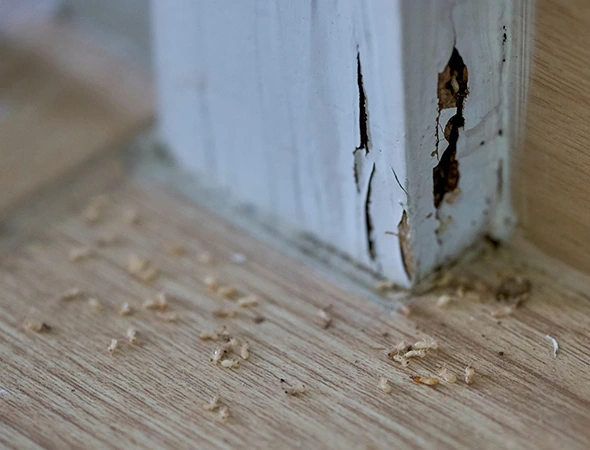
A line of mud tubes on the foundation or shed wings by a window usually means termites have found wood to eat. Our termite control in Medford, MA helps property owners find where termites feed so we can shut it down. Acting early limits how much wood they reach. We serve Medford and nearby communities.
Restaurants, offices, shops, and rental buildings share one risk: a pest sighting can cost a customer or tenant. Rogers Xtermination handles commercial pest control for Boston businesses and can be booked directly with the owner. We handle rodents, cockroaches, and insects before they lead to complaints or failed inspections. Service covers Boston and nearby cities.
Get in touch
Termite control is the work of finding, treating, and preventing termite activity in a building. Here in Massachusetts, we mostly deal with the eastern subterranean termite, which nests in the soil and reaches wood through narrow mud tubes. Because the colony stays out of sight, a big part of our job is detective work: tracing entry points, gauging how far the termites have spread, and judging whether the signs are current or old. Treatment may target the soil around the structure, the colony, or both. Carpenter ants often get mistaken for termites, so we confirm the insect before we recommend anything.
Eastern subterranean termites never live in the wood they eat. They nest in moist soil and travel up to your framing through pencil-thin mud tubes, which they build to stay damp and hidden from light. That habit tells us where to look first: foundation walls, basement corners, crawlspaces, and anywhere wood sits close to the ground, like porch steps, deck posts, or a stack of firewood leaning against the house.
The first goal on any Medford property is finding where the soil meets the structure. Once the route termites are using is clear, we can plan treatment around the areas where they cross from the ground into the building. That matters because a single entry point can feed damage well beyond it. Our team walks you through the findings so the plan makes sense before any work begins.
Our Services
Termites are rarely the only pest a property deals with over a year. The same visit that uncovers mud tubes might turn up mice in the basement or carpenter ants in a damp window frame. These services cover the rest of what we handle.
Strange droppings, unfamiliar insects, or a problem that keeps coming back all start here. General pest control lets us identify what is actually living in your space and treat it directly. Our focus is stopping the source rather than chasing symptoms. You get a clear answer and a quieter property.
Kids, pets, and shared walls change how a home should be treated. Residential service plans treatment around the people and animals living there. In multi-unit buildings, we consider how pests travel between apartments, since treating one unit alone falls short. Our goal is a comfortable household during treatment.
One sighting in a dining room or a tenant complaint can hurt a business fast. Commercial service keeps pests out of restaurants, offices, retail spaces, and managed properties. We work around your operating hours so customers never notice our visit. The payoff is smoother health inspections and fewer tenant calls.
Scratching in the ceiling or droppings under the sink usually means mice or rats found a way in. Rodent control removes the animals and closes the gaps they use. Our work pairs trapping with exclusion, because we know trapping alone leaves the door open. Your walls go quiet again.
Carpenter ants in the kitchen, wasps under the eaves, or cockroaches after dark each need a different fix. Insect control starts by identifying the species, then treating it with the right method. We target nests and hiding spots, not just the insects in view. Our targeted approach brings longer-lasting relief.
Hollow-sounding trim or wings on a windowsill deserve a closer look. Termite solutions cover treatment for active termites and protection against future colonies. Our work focuses on the soil and entry points termites use to reach framing. We help protect the wood that holds your building together.
Buying a house, selling one, or wondering about a trail in the basement are all good reasons for a look. A pest inspection gives you a clear record of what is present and what is not. We explain our findings in plain language. You decide next steps with real information.
Some properties see the same pests every season, like ants each spring and mice each fall. Preventive service sets up scheduled visits ahead of those cycles. We treat and seal before the usual rush, not after. Our plans usually cost less than handling a full infestation.
Work Process
Getting termites handled with us takes three straightforward steps.
Share the Signs
Call, text, or email us with what you noticed and where. A photo of the wings, tubes, or damaged wood helps us understand the situation before we arrive.
Inspect and Explain
We look over the areas tied to the signs you reported and check for live activity. Then we explain what we found and what our recommended treatment involves, in plain language.
Treat the Activity
Once you approve the plan, we treat the areas where termites are active or entering. Before we leave, you will know what we did and what to watch for going forward.
Winged termites showing up indoors in spring is one of the more alarming things a Brookline homeowner can see. A swarm like that usually means a mature colony is nearby, and the insects may already be working inside the walls or floor framing.
Not every termite sign points to a current problem, though. Old mud tubes can stay on a wall for years after the termites have gone. Our job is to break open a sample tube, check for live workers, and probe nearby wood so we can tell you whether you face an active infestation or leftover evidence. From there, we treat the zones where termites are feeding and explain the reason behind each spot. You get our honest read on your home instead of a guess.
Spraying the termites you can see rarely solves anything. Those workers are a small slice of a colony that may be spread through the soil around your Newton home, and the queen keeps producing replacements long after the visible ones are gone. Real control means reaching the colony itself.
We focus on methods that termites carry back or pass through as they travel between the nest and their food. Worker termites share food and groom one another, which helps a colony-level treatment move through the population. Our approach depends on what the property allows, including soil conditions, the foundation layout, and where we found activity. We talk through those factors with you, so the treatment plan never feels like a mystery.
Plenty of termite damage gets discovered by accident, when a Watertown renovation opens up a wall or a soft floorboard finally gives way. At that point, the first question is whether the damage is old or ongoing. We check the exposed wood for live termites and look closely at the galleries. Termite tunnels are usually lined or packed with soil, while carpenter ants leave clean, smooth galleries and sawdust-like debris, so the damage itself helps identify the culprit.
If termites are still present, our treatment targets the active areas before repair work closes things back up. We also point out wood that looks compromised, so a carpenter or contractor can assess the structural side. Treating first keeps new lumber from becoming the next meal.
Swarming termites have straight antennae, a thick waist, and two pairs of wings that are equal in length. Carpenter ants have bent antennae, a pinched waist, and front wings longer than the back pair. If you are unsure, text us a photo, and we will help identify it. Our carpenter ant control page covers what to do if it turns out to be ants.
Collect a few of the insects or shed wings in a sealed bag, or snap a clear photo. Vacuuming them up is fine, but skip the household bug spray, since it will not reach the colony. The swarmers die off quickly indoors, while the workers that cause damage stay hidden. Reach out so we can check where they came from.
Store-bought sprays can kill the termites you see, but they rarely reach a colony living in the soil. That can make activity seem to stop while feeding continues out of sight. Baits and foams sold online also depend heavily on correct placement and identification. We can confirm what you have and explain whether professional treatment makes sense.
Safety depends on the product, where it goes, and how it is applied. We talk through the treatment plan with you ahead of time, including any areas to keep children and pets away from and for how long. Following label directions is part of every application. Share any concerns before the visit so we can plan around your household.
It is a smart step for any home purchase, and some lenders or loan programs require one. An inspection shows whether there is active termite activity, past damage, or conditions that invite termites. That information can matter during negotiations or repairs before closing. Our pest inspection page covers how we handle buyer inspections and closing timelines.
Mud tubes, soft wood, or wings on a windowsill are worth checking before termites reach more of your framing. Call or text (781) 484-6230, or email rogersxtermination@yahoo.com, and we will help you plan your next steps.
Call: (781) 484-6230
Email: rogersxtermination@yahoo.com
Send A Message
Rogers Xtermination is a locally owned, owner-operated pest control company serving homes and businesses across Greater Boston with eight years of experience. Our mission is honest recommendations, careful work, and lasting results. We aim to earn a loyal local customer base through competitive pricing and personal attention.
Our termite work reaches beyond Medford to communities across Greater Boston and into Worcester. Each town on this list gets the same owner-led service, careful checks, and clear explanations. Find your community below, or call to confirm we cover your street.